

























We are delighted to announce an upcoming graduate conference in April 2027 hosted by students of the Classics and Classical Studies Graduate Programs at Columbia University. Please see the following call for papers.
Charlee Mandy, Shannon White, José Romero, and Araceli Rizzo
Organizing Committee
Columbia University Classics and Classical Studies Graduate Conference
Bodies and Labor: The Corporality of Work in the Ancient World
Friday, April 9th to Saturday, April 10th 2027
o quantae pariter manus laborant!
oh, how many hands work side by side! (Stat. Silv. 4.3)
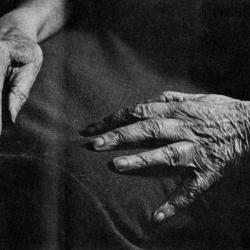
Statius' poem expounds upon the monumental construction of the Via Domitiana, praising the emperor’s works and power over the landscape. While the poet details the acts that went into construction, he completely elides the workers, invoked only as ‘hands’ logging, mortaring, and diverting streams. These disembodied laboring hands invite speculation about the embodied realities behind both representations and physical remnants of ancient labor.
There has been a recent surge of scholarly output on the topic of labor and laborers in the ancient Mediterranean world, from occupational associations and collective action (Bond 2025), to mercenaries as wage laborers (Van Regenmortel 2024), to workers’ lives and the ancient economy (Bowes 2025). It reflects a broader shift towards the study of collectivities of workers, connections between labor and identity, and nonelite-centered approaches to ancient history. We propose to build on this momentum by examining labor through the politics of laboring bodies, regarding bodies as meaningful sites for the making of history and human experience.
How were different kinds of labor represented, somatically experienced, and valorized or stigmatized? Where and how did conditions of labor shape the formation of identities and communities? What toll did labor take on ancient people’s bodies, from narratives about workers to the traces of daily activity legible in physical remains? How were various elite, nonelite, and enslaved people affected or characterized by the modalities of intellectual and physical labor that they performed?
Organized by Columbia University graduate students of the Classics Department and Classical Studies interdepartmental program, this conference aims to explore intersections between embodiment and labor in the ancient Mediterranean. We welcome interdisciplinary approaches engaging with historical, literary, archaeological, anthropological, and theoretical perspectives on labor and embodiment, as well as their reception in later periods.
Suggested topics include but are not limited to:
Bodies in the economy (e.g. mercenaries, sex workers, manual laborers)
Artists, artisans, craftsmanship, and production
Visuality and aesthetics of labor
Exploitation and enslavement
Community and belonging
Professional guilds and associations
Embodied knowledge
Aetiologies and mythologies of labor
Philosophical perspectives on labor
Disability studies
Medicine, health, leisure, and care of the body
Receptions of ancient labor
Professor Joseph Howley (Columbia University) will deliver the keynote lecture.
Key details:
Abstract: 300-400 words, plus select bibliography.
Presentations will be 20 minutes in length with additional time for discussion.
Language: English.
The conference aims to stimulate dialogue between graduate students and early career researchers, and especially welcomes scholars from traditionally underrepresented backgrounds.
Please submit your abstract and bibliography as a PDF with no identifying information to cugradancient@gmail.com by 10 December 2026. Include your name and affiliation in the body of your email.